Sustainability Reports

The Sustainability Report reflects GLS’s commitment to our customers, employees, and transport partners in the pursuit of continuous improvement of our logistics and transport processes.

As one of Europe’s leading parcel delivery providers, GLS assumes its social and environmental responsibility with a firm determination to progressively move towards efficient transport. The Sustainability Report reflects the ESG pillars (Environmental, Social, Governance) throughout our value chain, and compiles the projects, initiatives, and campaigns carried out over a financial year.
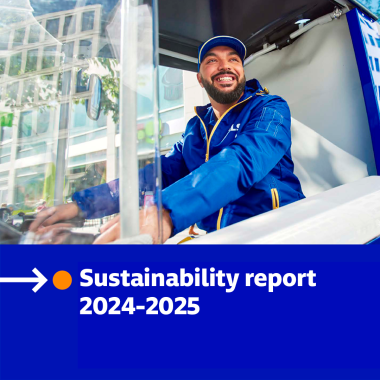
GLS courier driving a sustainable delivery vehicle in the city, image from the 2024/2025 Sustainability Report.”
 

The pursuit of more efficient and innovative logistics and transport defines a year in which we have strengthened our value proposition with the launch of Fulfilment services and invested in strategic hubs, automation, and technological solutions that enhance efficiency across the value chain. In addition, our network of convenience points continues to grow, and we are outlining an ambitious plan to deploy lockers in the coming years. The incorporation of Artificial Intelligence-based solutions marks another significant milestone this year, with Spain being designated as the location for one of GLS Group’s three AI hubs.

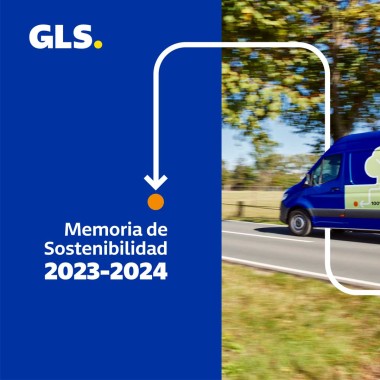
GLS Spain Sustainability Report 2023-2024 cover featuring a blue eco-friendly delivery van with a green tree symbol, driving through a countryside road, next to a bold blue section with the GLS logo and title.
 

With the rise of Out of Home (OOH) deliveries and sustainability becoming a decisive factor in the purchasing process, the Sustainability Report highlights the continuous updates of GLS Spain’s tools, technologies, and infrastructures to continue prioritising quality and proximity to people. This document includes initiatives such as the commitment to establishing science-based targets (SBTs), the signing of the agreement with the ONCE Foundation to promote the hiring of people with disabilities, the creation of the Diversity Department, and the establishment of the School of Excellence to provide high-quality training.

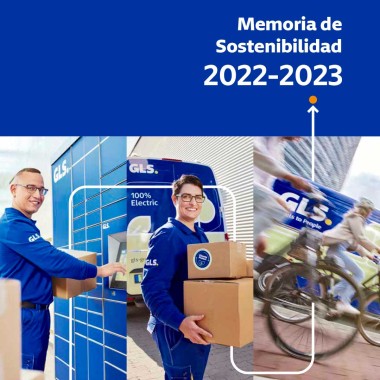
Cover of GLS Spain Sustainability Report 2022-2023 featuring delivery staff using parcel lockers, handling eco-friendly package deliveries with a 100% electric van, and cyclists delivering parcels in urban areas, highlighting sustainable last-mile solutions.

The acceleration of transformation within the parcel delivery sector defines a period in which products and services evolve alongside the technological advancements driven by the growth of eCommerce. Among the key milestones featured in this Sustainability Report are the inauguration of the KM 0 hub in Madrid, the expansion of the Parcel Shop network, the increase in operational capacity with an optimised hub in Alicante and new depots in Bilbao and San Sebastián, as well as the growth of the electric and low-emission vehicle fleet*.

 
Cover of GLS Spain Sustainability Report 2021-2022 featuring minimalist white line icons on a blue background, including a tree, people, a parcel, and a leaf, symbolizing sustainability, community, and responsible logistics.
 

The increase in demand for parcel delivery services marks a period redefined by the coronavirus pandemic, which multiplied the relevance of our sector in social and economic life. Digital disruption is one of the major milestones highlighted in the Sustainability Report, with new tools that ensure a better experience and closer proximity to all stakeholders. The development of the Climate Protect programme, which outlines GLS’s environmental ambitions, and our adhesion as a signatory member of the United Nations Global Compact are also among the key points included in the Sustainability Report 2021–22.

Electric and low-emission vehicles are understood to be those that, during operation, use exclusively electricity or fuels that generate lower emission levels than those derived from the use of diesel or petrol (such as HVO, biogas, or natural gas in its various forms: LNG, LPG, or CNG).